Have you ever flipped on the porch light and spotted a messy bundle of twigs tucked right above the bulb? It happens fast. One day it's clean, and a day or two later there's straw, droppings, and a very determined bird acting like it pays rent.
If you're searching for how to stop birds nesting on porch lights, the good news is this usually has a simple fix. You don't need gimmicks or a pile of gadgets. You need to check whether the nest is active, remove only what you legally can, and then block the spot so birds can't rebuild there.
- The fastest safe fix is to make the light unusable for nesting
- Why birds choose porch lights and how to make the spot unappealing
- How to tell whether a porch light nest is active and what the law means
- Best long-term prevention methods for porch lights
- Why fake owls, reflective deterrents, and repeated nest removal often fail
- Safety risks around porch lights and when to call a professional
- Conclusion
- FAQ
The fastest safe fix is to make the light unusable for nesting


The most reliable way to stop birds nesting on porch lights is to make the spot unsuitable before birds settle in, then physically block access once the nest is not active. If eggs or chicks are present, slow down. Many native birds in the U.S. are protected under the Migratory Bird Treaty Act, which generally means active nests should not be disturbed.
Step 1: Check whether the nest is active
Watch the porch light area for 24 to 48 hours before touching anything. Look for eggs, chicks, fresh green plant material, or adult birds returning again and again with food or nesting pieces.
If an adult keeps flying back to the same spot, crouching into the fixture, or scolding you from nearby, treat the nest as active. That's your sign to leave it alone for now. Have you ever noticed how some small birds can seem oddly brave near a doorway? They're often defending a nest.
Step 2: Shut off power and make the area safe
Before you work near any light fixture, turn off power at the breaker. Not just the wall switch. Make sure the fixture is cool and dry, and use a steady ladder on flat ground.
Wear gloves and avoid bare-hand contact with nesting material, droppings, or dust. Nests can carry mites, bacteria, and dried waste that breaks apart easily. If the fixture looks damaged or wires are exposed, stop there and call an electrician.
Step 3: Remove only non-active nesting material
If you've confirmed there are no eggs, chicks, or repeated adult visits, you can carefully remove the loose nesting material. Bag it right away so birds don't pull it back out and reuse it.
Clean the area with a mild disinfecting cleaner labeled safe for outdoor surfaces. Don't soak electrical parts. Wait, let me clarify. You're cleaning around the fixture housing, not spraying liquid into the wiring or socket area.
Step 4: Block the fixture zone immediately afterward
This is the part that actually solves the problem. If you only remove the nest, many birds will rebuild within a day or two, especially in spring.
Add a physical barrier around the top, sides, or mounting base of the light so birds can't land, wedge twigs, or tuck themselves into a sheltered corner. A small guard, screen, or fitted exclusion cover works much better than trying to scare birds away after they've already chosen the spot.
Why birds choose porch lights and how to make the spot unappealing
Porch lights check a lot of boxes for nesting birds. They're high enough to feel safe, tucked under an overhang, and often protected from wind and rain. Some fixtures also have little ledges or gaps that hold twigs like a shelf. To a bird, that can feel as cozy as a covered carport.
Warmth can matter too. A light fixture that gets slightly warm, especially in cool spring weather, may seem like a stable place to start building. Add a nearby beam, wreath hook, camera, or door trim for perching, and you've got a prime nesting zone.
So, if you want to learn how to stop birds nesting on porch lights, think like a bird for a minute. Remove the easy landing spots. If the fixture has a flat top, block it. If there's a gap behind the light, cover it with a fitted piece of hardware cloth or a manufacturer-safe guard. If the fixture angle can be adjusted downward or away from a corner, that helps too.
The goal is to make the area open and awkward, not comfortable and hidden. That's why habitat changes work better than constant cleanup. If the shelter and ledge stay the same, birds often come right back. And honestly, that gets old fast.
How to tell whether a porch light nest is active and what the law means

An active nest usually has one or more of three things. Eggs, chicks, or adult birds using it regularly. If you see an adult bird bringing food, sitting low in the nest, or returning several times over a day or two, assume the nest is active.
That matters because many native birds are protected by the Migratory Bird Treaty Act. This federal law protects many bird species, along with their eggs and active nests. In plain terms, that means you generally should not remove or disturb an active nest just because it's inconvenient. House sparrows and European starlings are common exceptions in many areas because they're non-native, but correct ID matters before you act.
If you're unsure what species you have, it's safer to wait and observe or call your state wildlife agency or a licensed wildlife control pro. Porch light nests are often built by robins, phoebes, wrens, or doves, and many of those are protected.
Once the young birds leave and the nest is inactive, you can remove it and install exclusion right away. Timing is everything here. A two-day delay after fledging can be the difference between solving the issue and watching the same birds start over again.
Best long-term prevention methods for porch lights
The best answer to how to stop birds nesting on porch lights long term is physical exclusion. That means changing the fixture area so birds can't perch, balance, or stuff nesting material into it. Hardware beats gimmicks almost every time.
Here are the most useful options:
| Prevention method | Where it works best | Why it helps |
|---|---|---|
| Fixture guard or cage | Lantern-style lights, wall sconces, recessed corners | Blocks access to sheltered nest space |
| Small-mesh hardware cloth | Behind or above fixtures with gaps | Prevents birds from tucking twigs into voids |
| Sloped cover or angled cap | Flat-topped lights or mounting blocks | Removes the ledge birds need to start a nest |
| Adjusting fixture angle or replacing bulky fixtures | Older lights with deep tops or decorative arms | Makes the area less sheltered and less stable |
| Removing nearby perches | Hooks, unused brackets, decor close to the light | Reduces landing spots and inspection perches |
Use rust-resistant materials rated for outdoor use. Keep barriers neat and secure so they don't trap heat against the fixture or block needed ventilation. If you're renting, ask before drilling into exterior trim.
The sweet spot is simple. Remove the nest when inactive, clean the area, then install exclusion the same day. That's the closest thing to a reset button.
Why fake owls, reflective deterrents, and repeated nest removal often fail

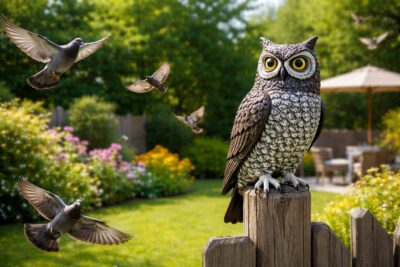
Fake owls look convincing to people. Birds usually figure them out pretty quickly. The same goes for rubber snakes, spinning reflectors, and shiny tape. They may cause a little hesitation at first, but sheltered porches weaken those effects because wind and movement are limited.
Birds also learn from experience. If the porch light still offers cover from rain and a handy ledge for twigs, many will keep trying. That's why repeated nest removal by itself often turns into a frustrating loop. You clean it up, they rebuild. Again and again.
Reflective tools can sometimes help in open gardens or crop areas where movement and light flashes change all day. But near a front door, under a roofline, they're less reliable. Some birds barely care after a few visits.
There's another issue. Constant disturbance can stress nesting birds without fixing the root cause. A better approach is to wait until the nest is inactive, then use a solid physical barrier. That's less dramatic, maybe less satisfying in the moment, but it works more consistently.
Safety risks around porch lights and when to call a professional
Bird nests around porch lights aren't just messy. They can block the light, collect damp debris, and leave droppings on siding, railings, and welcome mats. In some cases, nesting material packed against a fixture may increase heat buildup or create a fire risk, especially with older halogen or incandescent bulbs.
Always shut off power before inspection or cleanup. If the nest is tucked inside the fixture body, near wiring, or behind a loose mounting plate, don't poke around blindly.
Call a pro if you notice any of these warning signs:
- Eggs, chicks, or adult birds actively using or defending the nest
- Exposed wires, sparking, moisture inside the fixture, or nesting material inside the electrical housing
- Aggressive birds, hard-to-reach ladder work, or repeated rebuilding after you've already installed exclusion
A wildlife control operator can help with legal nest issues and species ID. A licensed electrician should handle damaged fixtures, overheated wiring, or any repair that goes beyond simple cleanup. Sometimes you need both, and that's okay.
Conclusion

Start with the simple fix. Check whether the nest is active, leave protected active nests alone, and remove only inactive nesting material after shutting off power. Then block the spot right away.
That's really the core of how to stop birds nesting on porch lights. Not scare gadgets. Not endless cleanup. A safer, longer-lasting setup that removes shelter and access.
Once the fixture area no longer feels snug and protected, most birds move on to a better spot. And your porch can go back to being a porch, not a bird construction site.
FAQ
Can I remove a bird nest from my porch light?
Yes, if the nest is inactive and you've turned off power first. If there are eggs, chicks, or adult birds using it, don't remove it until it's legal and safe, since many active nests are protected.
What keeps birds from nesting on porch lights long term?
Physical exclusion works best. Remove ledges and gaps around the fixture, adjust the setup if possible, and install guards or barriers so birds can't perch or wedge nesting material into the light area.
Do fake owls or reflective deterrents actually work?
Sometimes, but usually only for a short time. Birds adapt quickly, especially on sheltered porches, so these tools are unreliable if you use them without blocking the nesting spot.