Quick Answer: To keep birds off your porch, combine multiple deterrent strategies: install physical barriers (bird spikes, fishing line, netting), hang reflective items that startle birds, remove food and water sources, use bird-safe repellent sprays, and eliminate nesting spots. Research consistently shows that a multi-pronged approach works far better than any single method, since birds quickly adapt to individual deterrents. All methods should be humane and legal—it is illegal to harm or trap most wild birds.
Birds are beautiful to watch and benefit the environment by spreading seeds, pollinating plants, and controlling insect pests. However, they can also create real problems around your home—spreading disease through their droppings, creating fire hazards by nesting in vents and chimneys, and damaging home-grown food.
Your porch can become a popular gathering spot for birds, making it an undesirable place to relax. Birds may find your porch attractive because it offers food or water sources, features colors they’re drawn to, or provides a safe location for roosting and nesting.
Turning your porch into a bird-free zone involves strategies that use strong odors, startling objects, physical barriers, and habitat modification. This guide covers 18 proven methods, from bird-repellent sprays and reflective items to removing attractants and blocking nesting spots.
It is illegal under the Migratory Bird Treaty Act to harm, trap, or kill most wild birds, their nests, or their eggs. All methods in this guide are humane deterrents designed to encourage birds to relocate, not to harm them. Once a nest with eggs is established, removal may be restricted by law—the best time to act is before nesting begins, typically late winter to early spring.
- Understanding Why Birds Choose Your Porch
- Physical Barrier Methods
- Visual Deterrent Methods
- Sound-Based Deterrent Methods
- Odor & Surface Deterrent Methods
- Habitat Modification Methods
- Color-Based Methods
- Pet & Professional Methods
- Health Risks: Why Bird Droppings Matter
- Building an Effective Strategy
- Conclusion
Understanding Why Birds Choose Your Porch
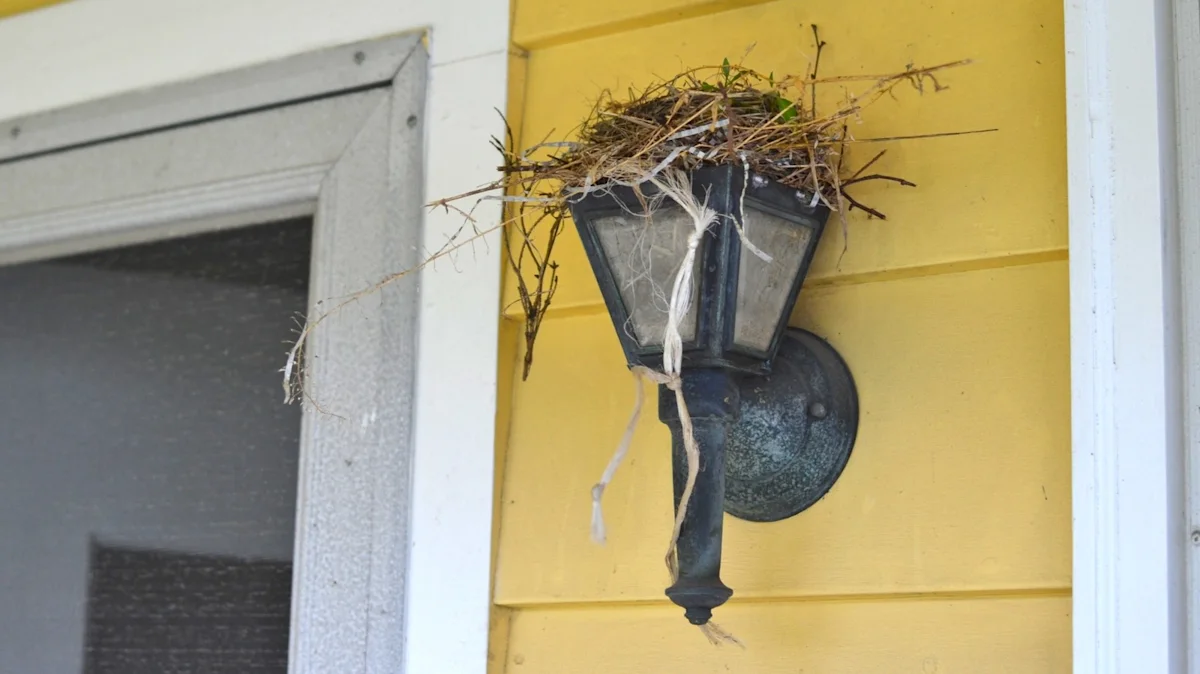
Birds are creatures of habit that return to familiar, rewarding locations. Before applying deterrents, it helps to understand what draws them to your porch in the first place. According to Oregon State University Extension research, the best results come from a multi-pronged approach because birds eventually adapt to any single deterrent.
The most common attractants include:
- Food sources: Bird feeders, pet food, garbage, fallen seeds, and insects
- Water sources: Birdbaths, pooling water, and standing puddles
- Shelter: Safe roosting and nesting spots in eaves, gutters, hanging plants, and rafters
- Attractive colors: Bright hues that birds associate with food or mates
Bird behavior changes with the seasons. Spring and early summer are peak nesting periods, so deterrents are most effective when implemented before nesting begins. Acting early—in late winter to early spring—prevents birds from establishing the habitual patterns that make them so difficult to dislodge later.
Physical Barrier Methods
Physical barriers are among the most reliable long-term solutions because they make landing and perching physically impossible rather than relying on birds’ learned avoidance.
Install Fishing Line
This nearly invisible method is widely used by businesses and works well on porches. Run fishing line above the top deck railing from post to post, hanging about 2 inches above the horizontal rails. Birds cannot balance on the thin, unstable line.
Tip: Keep the line taut so it doesn’t entangle birds or other wildlife, and check it periodically—especially after storms.
Install Bird Spikes
Bird spikes may not be the most attractive option, but they’re highly effective at keeping birds off railings. According to bird control specialists, spikes are designed to make surfaces unpleasant to perch on—not to hurt animals. They come in rubber, plastic, or metal to match your décor.
Block Nesting Spots
Birds seek safe nesting locations on or near your porch, including gutters and eaves. Eliminate these opportunities by installing gutter guards, using bird netting, and sealing cracks or crevices in exterior walls and flooring. For enclosed porches, ensure there are no entry points.
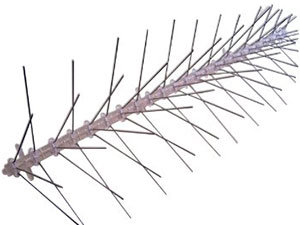
Protecker Bird Spikes
Product Link: View on Amazon
Key Features:
- Set of 12 strips, each 1 foot in length (12 feet total coverage)
- Durable plastic withstands UV light and temperature fluctuations
- Multiple installation options: zip ties, screws, or double-sided tape
- Humane design deters without harming birds
- Suitable for railings, ledges, and flat surfaces
Note: Zip ties, screws, and tape are not included. Choose the mounting method that best suits your porch surface.
Visual Deterrent Methods
Visual deterrents exploit birds’ instinct to flee from perceived threats and unpredictable movement. Oregon State University Extension notes that reflective tape and predator decoys are widely used, though their effectiveness varies by species and improves when methods are rotated.
Hang Reflective & Shiny Items
Reflective objects move in the wind and bounce unpredictable light that startles birds. Mount them from porch railings and overhanging roof sections. Effective options include old CDs or DVDs, reflective flash tape, small mirrors, and aluminum cans.
Use Garden Decor to Scare
Decorative items can startle birds with movement, sound, bright colors, and reflective surfaces. Glass garden balls, for example, can resemble a predator’s eyes. Try pinwheels, mirrored globes, garden flags, and wind chimes. Use a variety for the best effect.
Add Faux Predator Decoys
Owls prey on other birds, so an owl statue or decoy can deter them. Research confirms that decoys resembling natural predators like hawks and owls work best. Move the decoy every few days so birds don’t realize it’s harmless.
Birds are intelligent and quickly learn that a stationary decoy poses no real threat. University extension research emphasizes that moving and varying your deterrents prevents habituation. Reposition decoys, swap out reflective items, and combine multiple visual cues to keep birds guessing.
Sound-Based Deterrent Methods
Install an Ultrasonic Bird Device
Electronic devices that emit ultrasonic frequencies may help deter birds. If you have pets, check the product labeling to ensure it won’t disturb them. Note that research shows mixed results for ultrasonic devices outdoors, where sound dissipates—so these work best alongside other methods.
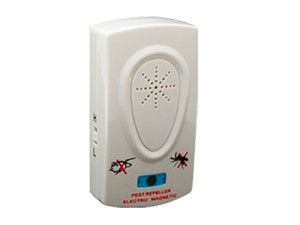
Bird-X Balcony Gard Ultrasonic Bird Repeller
Product Link: View on Amazon
Key Features:
- Adjustable frequency range of 15 to 25 kHz
- Covers up to 900 square feet with adjustable settings
- Motion-activated for targeted deterrence
- Easy to install on any surface
- Small and discreet design
- Powered by batteries or included 50-foot cord
- Non-toxic and pet-conscious operation
Best Used: In conjunction with other strategies in this guide for maximum effectiveness, since outdoor sound deterrents perform best as part of a layered approach.
Odor & Surface Deterrent Methods
Use Bird-Safe Repellent Sprays
DIY and commercial bird repellent sprays use odors that birds find offensive, encouraging them to stay away. Citrus-scented repellents are particularly effective due to birds’ natural aversion to citrus. Sprays need reapplication every few days and after rain to keep the scent fresh.
Sprinkle Baking Soda
Baking soda sprinkled around porch railings creates a surface birds dislike—it feels slippery underfoot, prompting them to roost elsewhere. As a bonus, it also helps keep ants away. Reapply often, especially after inclement weather.
Use Motion-Activated Sprinklers
Motion-activated sprinklers startle birds with sudden bursts of water. Keep in mind the downsides: excess water can make porches slippery, may rot wooden surfaces over time, and will spray delivery people and guests. Consider this a temporary solution.
DIY Chili Pepper Bird Repellent Spray
A popular homemade repellent uses chili peppers and vinegar to create an offensive odor barrier. Caution: This can cause eye irritation and will damage sensitive vegetation and grass. Wear eye protection and apply only to targeted areas.
- Combine 24 red or green chili peppers, ½ gallon of water, and ¼ cup vinegar in a large crockpot
- Simmer on low for 8 hours
- Allow the mixture to cool, then strain it, keeping the liquid
- Pour the liquid into a spray bottle and apply generously to targeted areas
- Reapply every few days and after rain
Habitat Modification Methods
Removing the things that attract birds is one of the most sustainable long-term strategies. Bird control experts emphasize that addressing the root cause—food, water, and shelter—makes all other deterrents more effective.
Move Bird Feeders & Birdbaths
Birds may roost on your porch because food or water is nearby. Relocate feeders and birdbaths to a different part of your property, far from the porch. As a general rule, keep them at least 10 feet from the home to reduce window-strike risk. If birds remain a nuisance, remove these features entirely.
Cover & Relocate Food and Water Sources
Eliminate pooling water, garbage, and pet food near your porch. Insects and earthworms thrive in standing water, which in turn attracts hungry birds. Store pet food in sealed containers away from the porch and promptly remove any leftovers—this deters other pests too.
Trim Bushes, Hedges & Trees
Birds favor natural roosting and nesting sites in nearby vegetation. Experts recommend pruning limbs within 6–8 feet of the structure to reduce cover and landing platforms. Keep bushes and hedges trimmed short, or remove problem plants entirely.
Remove Hanging Plants
Hanging plants are popular spring and summer décor, but birds love these elevated pots as safe, suspended nesting sites for raising their young. Remove hanging baskets from your porch and relocate them elsewhere.
Color-Based Methods
Remove Attractive Colors
Many birds are drawn to certain colors associated with food and mating. If your porch features these colors, birds may visit more often. Common attractant colors include red, orange, yellow, green, blue, and iridescent or vibrant hues. Remove or repaint items in these shades, and check whether nearby flowering plants are part of the draw.
Paint the Porch Bright White
If you have a wooden porch, consider painting it white. Many birds flash white feathers to warn of danger, so white can signal alarm and aggression. Large white surfaces also make birds stand out to predators, prompting them to avoid these exposed areas.
Pet & Professional Methods
Get a Pet (With Caution)
The regular presence of a dog or cat will scare birds away. However, be aware that cats are aggressive hunters—cats in the U.S. kill over 2 billion birds every year. If you’d rather not deal with bird carcasses (or contribute to bird mortality), choose a different strategy.
Contact Professional Pest Control
Keeping birds off your property takes time, patience, and experimentation. If birds become an overwhelming nuisance despite your best efforts, professional wildlife control services can provide safe, legal, and effective solutions tailored to your situation and local bird species.
Health Risks: Why Bird Droppings Matter
Beyond being a nuisance, accumulated bird droppings can pose genuine health concerns, which is why keeping birds off your porch is about more than just cleanliness.
According to the CDC, the fungus Histoplasma—which causes the respiratory disease histoplasmosis—grows especially well in soil enriched by accumulated bird droppings. While fresh droppings on surfaces like windowsills generally don’t pose a risk (birds themselves are rarely infected), large accumulations over time create favorable conditions for the fungus to grow in soil below.
The CDC recommends that large accumulations of bird droppings be cleaned up by professional companies specializing in hazardous waste removal. If you must clean smaller amounts yourself, spray the area with water first to reduce dust, and wear disposable gloves and an N95 mask. People with weakened immune systems should avoid disturbing droppings altogether, as they face higher risk of severe infection.
Bird droppings can also harbor other concerns. The CDC notes that Cryptococcus neoformans (a fungus causing cryptococcosis) lives in bird droppings, and psittacosis—caused by Chlamydia psittaci bacteria—can infect humans who breathe in aerosolized dried droppings from infected birds, including pigeons.
Building an Effective Strategy
The single most important principle in bird control is that no method works alone forever. Oregon State University Extension research is clear: in most cases, the best results come from a multi-pronged approach because birds adapt to any individual deterrent over time.
Combine deterrents from different categories for maximum effect. For example, pair a physical barrier (bird spikes) with a visual deterrent (reflective tape), habitat modification (removing food sources), and an odor repellent (citrus spray). This multi-sensory strategy gives birds no comfortable foothold and prevents them from habituating to any single deterrent.
Keep these principles in mind:
- Act early: Implement deterrents before nesting season (late winter to early spring)
- Rotate methods: Move decoys and swap visual deterrents to prevent habituation
- Stay consistent: Reapply sprays and maintain barriers, especially after weather
- Address attractants first: Remove food, water, and shelter for lasting results
- Stay legal and humane: Never harm birds—use only deterrent-based methods
Conclusion
The pleasant chirping and colorful flash of feathers can be a joy to watch—until birds take over your porch for roosting and nesting, quickly becoming a nuisance and a potential health concern.
Fortunately, you have many humane tactics at your disposal. Colorful and noisy décor like reflective tape, garden flags, and wind chimes can startle birds away. Bird-repellent sprays, baking soda, and trimmed landscaping reduce the appeal of your porch. Prevention techniques such as blocking gutters, installing fishing line, and removing food and water sources make your porch an undesirable destination.
Remember that the most effective approach combines multiple strategies and adapts over time as birds learn. Start before nesting season, rotate your deterrents, and address the underlying attractants. If your efforts fall short or the problem becomes overwhelming, professional wildlife control services can provide safe, legal, and effective bird control tailored to your needs.
- Install physical barriers (bird spikes, fishing line, netting)
- Remove all food and water sources near the porch
- Hang reflective and shiny items that move in the wind
- Block nesting spots in gutters, eaves, and crevices
- Apply citrus-scented or DIY chili-pepper repellent sprays
- Add and frequently reposition predator decoys
- Trim vegetation within 6–8 feet of the porch
- Combine multiple methods and rotate them regularly