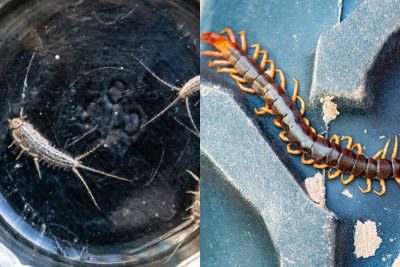
Have you ever flipped on the bathroom light at night and seen something long-legged dart behind the toilet? It's a pretty unsettling sight. When people search centipedes in bathroom what causes them, the short answer is usually this. Your bathroom offers moisture, shelter, and tiny insects to eat.
That means centipedes are often more of a clue than the main problem. If they're showing up, there's usually a damp spot, a hidden gap, or another pest hanging around. Below, you'll learn how to tell what you're seeing, what attracts them, and how to stop them from coming back.
- Why centipedes show up in bathrooms
- Are bathroom centipedes dangerous?
- How to tell a house centipede from similar-looking insects
- What bathroom conditions attract centipedes
- How to get rid of centipedes in bathrooms and prevent them from coming back
- When centipedes point to a bigger pest or moisture problem
- When to call a pest professional
- Conclusion
- FAQ
Why centipedes show up in bathrooms

If you're asking centipedes in bathroom what causes them, the main causes are moisture, warmth, darkness, and food. Bathrooms check all four boxes. They stay humid after showers, they have quiet hiding spots behind vanities and baseboards, and they often attract small insects like silverfish, drain flies, and young roaches.
Centipedes don't come in to chew wood or ruin fabric. They're hunters. They follow prey. So if one keeps showing up near the tub or sink, it's often feeding on something else you haven't noticed yet.
Bathrooms also have lots of hidden entry points. Small gaps around supply lines under the sink, spaces where the toilet pipe enters the wall, cracked grout, and loose trim can all give them a way in. And once inside, they like cool, damp shelter. Think under bath mats, behind stacked towels, or inside cluttered cabinets.
Season matters too. During wet weather, very humid summers, or heavy rain, centipedes may move indoors more often. If the soil around your foundation stays soaked, pests head for drier cover. Oddly enough, that can still be your bathroom because it offers stable temperatures and easy hiding places.
So the real answer isn't just "you have centipedes." It's usually "your bathroom is supporting the conditions centipedes like."
Are bathroom centipedes dangerous?

Usually, no. Most of the time, the centipede you see in a bathroom is a house centipede, and while it looks creepy, it's not considered dangerous to people or pets.
House centipedes can bite, but that's rare. And when it does happen, the bite is usually mild, more like a bee sting or less for most people. They aren't aggressive. They'd much rather sprint into a crack than come near you.
They can actually help a little by eating other pests indoors. Silverfish, flies, small roaches, even spiders can end up on the menu. So if you see one, the bigger question is often not "Will it hurt me?" but "What is it finding to eat in here?"
Still, you don't have to live with them. Beneficial or not, most people don't want fast-moving predators in the bathroom. Fair enough.
How to tell a house centipede from similar-looking insects
Correct ID matters. A house centipede needs a different fix than silverfish or earwigs. The good news is that house centipedes have a pretty distinct look once you know what to watch for.
| Pest | What it looks like | How it moves | What it usually means |
|---|---|---|---|
| House centipede | Flattened body, very long legs, usually gray-yellow with darker stripes | Extremely fast, sudden bursts | Moisture and prey insects are present |
| Silverfish | Tear-drop shaped, silvery, no long legs sticking out | Wiggles and runs | High humidity, paper and starch food sources |
| Earwig | Brown body with pincers on the rear | Runs, but not as fast as a centipede | Damp hiding spots nearby |
| Millipede | Rounder body, many short legs, slower | Slow crawl, curls up sometimes | Excess moisture, often wanders in by mistake |
House centipedes usually have 15 pairs of legs as adults. Their legs stick out so far that they can look bigger than they really are. They also tend to appear at night, then vanish in seconds when the light comes on.
Well, actually, that's one of the easiest clues. If it moves like a little feather with legs and seems almost too fast to follow, it's probably a house centipede.
What bathroom conditions attract centipedes

Bathrooms attract centipedes because they hold moisture in small, hidden places. A room can look clean and still stay damp where you don't normally check. Under the sink. Around the tub skirt. Behind the toilet. Inside wall voids near plumbing. That's where the problem often starts.
Leaking pipes are a major cause. Even a slow drip under a vanity can keep wood and drywall damp for weeks. Poor ventilation matters too. If mirrors stay foggy for a long time after a shower, that extra humidity settles into grout lines, caulk seams, towels, and bath mats. Over time, those areas become ideal shelter for insects and the centipedes that hunt them.
Standing water also plays a role. A little water left around the tub edge, a damp shower curtain pooled on the floor, or a wet toothbrush cup tray may not seem like much. But pests don't need much. They just need regular access.
Clutter makes things worse. Piles of paper products, extra toilet paper, cardboard, and packed cabinets under the sink create dark resting spots. Cracked grout and gaps around baseboards add cover and entry points. And during humid spells or rainy weeks, pest activity often spikes.
So when people ask centipedes in bathroom what causes them, the practical answer is this. Damp air, damp surfaces, hidden cracks, and other bugs living nearby.
How to get rid of centipedes in bathrooms and prevent them from coming back
You usually don't need heavy spraying to solve this. The best fix is to make the bathroom dry, sealed, and less inviting to the insects centipedes eat.
- Fix leaks first. Check under sinks, around toilet bases, behind the tub access panel, and along supply lines. Even a small drip can keep a centipede-friendly zone active.
- Lower humidity. Run the exhaust fan during showers and for 20 minutes after. If your bathroom has a window, crack it open when weather allows. Try to keep indoor humidity below about 50 percent.
- Dry wet surfaces. Wipe out sinks, tub edges, and puddles on the floor. Hang towels so they dry fully, and wash bath mats often.
- Seal gaps. Use caulk around pipe openings, baseboards, and cracks near the tub or vanity. Door sweeps can help if they may be entering from another damp room.
- Reduce hiding spots. Clear clutter from under the sink. Store paper goods in sealed plastic bins instead of cardboard.
- Control their food source. Look for silverfish, drain flies, or roach activity. Clean drains, remove lint and hair buildup, and keep bathroom trash emptied.
- Remove the ones you see. Vacuuming is a simple, low-risk option. Sticky traps along baseboards can also help monitor activity.
If you want a treatment, start with the least toxic option. Most bathrooms respond better to moisture control than to repeated insecticide use.
When centipedes point to a bigger pest or moisture problem

A single centipede now and then doesn't always mean a major issue. But repeated sightings usually mean something is supporting them. If you keep finding them in the same bathroom, especially near a vanity or tub wall, there's a good chance another pest or moisture source is active there.
The most common linked pests are silverfish, drain flies, and small roaches. These insects thrive in damp spaces and give centipedes a steady food supply. Have you ever noticed tiny moth-like flies near the sink drain, or silvery insects that dart when you move a towel? Those are useful clues.
Moisture damage is the other big concern. Peeling paint, soft baseboards, musty smells, swollen trim, or grout that never seems to dry can point to a hidden plumbing leak or poor ventilation. That's bigger than a bug problem. It can lead to mold growth and structural damage if ignored.
If your bathroom shares a wall with a laundry room, basement, or kitchen, the source may even be next door. Centipedes move through wall voids and plumbing openings pretty easily.
So yes, recurring centipedes can be a warning sign. Not of danger, usually, but of an underlying moisture issue or a prey insect population that needs attention.
When to call a pest professional
DIY steps work in many cases. But sometimes the pattern tells you the problem is deeper than surface cleaning and a little caulk.
Call a pest professional if you still see centipedes regularly after two to four weeks of drying, sealing, and reducing other insects. That's a sign the source may be hidden in a wall void, under flooring, or in a nearby room.
You should also get help if you notice visible water damage. Soft drywall, stained ceilings below an upstairs bath, warped trim, persistent musty odor, or mold around baseboards often means moisture is building up where you can't reach it. In that case, a plumber or water damage specialist may be just as important as pest control.
Professional help also makes sense if you're seeing multiple pests at once. For example, centipedes plus roach nymphs, drain flies, or silverfish usually means the bathroom environment is supporting several species. A good pro should inspect, identify the moisture source, and explain treatment clearly without pushing unnecessary repeat sprays.
That last part matters. If the company only wants to spray and doesn't talk about humidity, leaks, or exclusion, keep looking.
Conclusion

So, centipedes in bathroom what causes them usually comes back to one thing. Conditions. Moisture, shelter, and small insects give centipedes a reason to stay.
The good news is that they're often a fixable symptom, not a disaster by themselves. Dry the room out, seal gaps, clean up prey insects, and watch for signs of hidden leaks.
Once you deal with the real cause, centipede sightings usually drop fast. And your bathroom ends up cleaner, drier, and a lot less welcoming to pests of any kind.
FAQ
Why are centipedes suddenly in my bathroom?
Sudden sightings often happen after humidity goes up, a small leak starts, or prey insects become more active. Rainy weather and warm, muggy periods can also push them indoors.
Do centipedes mean I have a bigger pest problem?
Sometimes, yes. Repeated centipedes often point to moisture-loving pests like silverfish, drain flies, or roaches, or to a hidden damp area that needs repair.
How do I keep centipedes out of the bathroom for good?
Focus on the long-term fix. Keep humidity below about 50 percent if possible, repair leaks, dry wet surfaces, seal entry gaps, and deal with the insects they're feeding on.