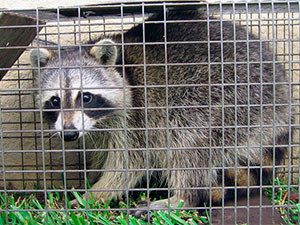
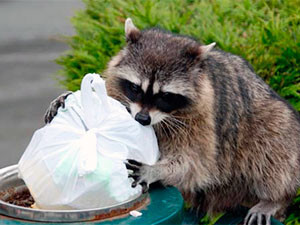
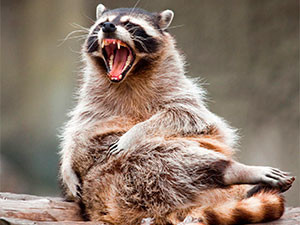
Raccoons love attics because they offer warm, secure places to nest and raise their young. If you notice nocturnal noises that sound like heavy walking, thumping, or chirping, you might have raccoons.
These intelligent animals can cause tremendous destruction to structural supports and insulation, and leave behind disease-causing feces that pose serious health risks.
You can take action to remove raccoons from your attic using offensive odors, loud noises, bright lights, one-way exclusion doors, and live traps. Once the raccoons are out, implement measures to prevent reentry, decontaminate the space according to CDC guidelines, and repair any damage.
Read on to learn the comprehensive steps needed to get and keep raccoons out of your attic permanently.
Step 1: Identify The Pest & Understand The Risks
Raccoon Identification
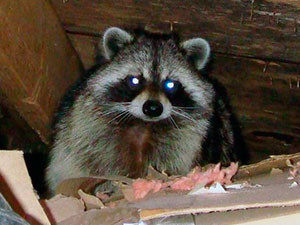
Before implementing any removal methods, confirm you’re dealing with raccoons. Raccoons need only a 4-inch gap to enter a space and are intelligent, dexterous animals capable of finding their way into attics.
Other large pests like opossums can also access attics, as can smaller animals such as rats, mice, bats, and squirrels. Sometimes smaller pests’ activities are amplified by the attic space, making them sound like larger animals.
Characteristics of Raccoon Presence:
- Visual confirmation: Gray fur with black and white markings, bushy striped tails, distinctive black “mask” around eyes, stout body (10-30 pounds), flat feet
- Nocturnal activity: Most active at night when searching for food
- Breeding season activity: Increased presence from February through July when raising offspring
- Nesting in hidden spots: Offspring often nestled in eaves, wall spaces, and other hard-to-reach areas
- Heavy thumping sounds: Loud rustling and walking noises in attic and on roof due to their weight (approximately 10-30 pounds)
- Varied vocalizations: Chirping, hissing, growling, purring, whimpering, screeching; offspring produce higher-pitched crying, mewing, and whining sounds
- Nest materials: Constructed from leaves, twigs, debris, torn insulation, shredded cloth, and paper
- Structural damage: Chewed wooden support beams, roofing, drywall, HVAC components, and electrical wiring
- Fecal evidence: Dark tubular droppings with pungent odor, along with urine stains
- Food remnants: Scraps including bones; evidence from invaded garbage cans and vegetable gardens
- Entry points: Openings 2½ inches or larger (may have brown residue staining around the hole from repeated use)
Health Risks
Raccoon droppings can contain Baylisascaris procyonis (raccoon roundworm) eggs, which cause a difficult-to-treat and potentially fatal infection called Baylisascariasis. The CDC reports that up to 82% of adult raccoons and 90% of juvenile raccoons are infected with this parasite.
About Baylisascaris (Raccoon Roundworm):
- Eggs are not visible to the naked eye and become infectious after 2-4 weeks in the environment
- Can survive in soil for years under the right conditions
- Causes severe neurological disease, particularly dangerous for children and those with developmental disabilities
- No drug has been found to be completely effective once infection occurs
- Early treatment with albendazole may reduce severity if started immediately after exposure
- Most infections occur in children who accidentally ingest contaminated soil or objects
Proper Protection is Essential:
The CDC recommends wearing personal protective equipment (PPE) when dealing with raccoon-infested spaces:
- Rubber gloves (disposable or washable)
- Rubber boots or disposable shoe covers
- N95-rated respirator (protects against aerosolized eggs, fungal spores, bacteria, and viruses)
Additional Health Concerns:
- Rabies: Raccoons are primary rabies carriers; mother raccoons with young will aggressively defend their offspring
- Parasites: Fleas and lice that can spread to pets and people
- Structural hazards: Exercise caution when walking on attic support beams to avoid falling through the floor/ceiling
Professional decontamination services can handle raccoon waste removal if you prefer not to do it yourself.
Legal Considerations
Depending on local and state regulations, there may be restrictions on:
- Use of poison
- Trapping methods
- Shooting or lethal control
- Catch-and-release practices
- Relocation requirements
Many states require that trapped raccoons be released on the property where they were caught due to rabies concerns. Verify local regulations before taking any removal action to avoid legal consequences.
Step 2: Remove The Raccoons Humanely

Important Timing Consideration
If a female raccoon is raising offspring (February through July is peak breeding season), removal is more challenging. The mother will not abandon her babies. Wait a few weeks for the young to mature enough to leave with their mother, or work with professionals experienced in handling mothers with young.
Use the following strategies with patience and perseverance to convince raccoons to leave your attic:
Newspaper Entry Test
Monitoring Tip: After implementing any removal tactic, place wadded newspaper at the raccoon’s entrance point (usually has brown stains around it). If the newspaper is disturbed, the raccoon is still using the entrance. Replace daily. After it remains undisturbed for at least 3 consecutive days, raccoons have likely left.
Humane Removal Methods
| Method | How It Works |
|---|---|
| Loud Noises |
Raccoons seek attics for warm, quiet, secure places to raise young. Create a stressful atmosphere with loud noises to make your attic undesirable. Effective noise strategies:
Timing: Raccoons sleep during the day, so daytime noise disrupts their sleep. Nighttime startling also works but inform household members and neighbors first. |
| Bright Lights |
Motion-activated floodlights cause stress for nocturnal raccoons, making them want to flee. Implementation:
|
| Offensive Odors |
Commercial raccoon repellents are available in granular and spray forms. Follow instructions for indoor use carefully. DIY odor options:
Application tips:
|
| One-Way Exclusion Doors |
Critical Warning:
Only use this method if there are NO offspring in the attic. Otherwise, the mother cannot assist her babies in leaving and they will die in the attic. This device allows raccoons to leave through an entry point but prevents reentry by closing behind the animal. Professional installation recommended: Wildlife control services or professional pest control can install these devices, or you can construct your own. View example installation: Humane Society: Raccoon Evicted Using One-Way Door |
| Live Trapping |
Live traps can be effective for raccoon removal when properly used. Safety requirements:
Effective baits:
Legal requirements: Because raccoons can carry rabies, many jurisdictions prohibit relocation. Verify whether you can catch-and-release in your area or if caught raccoons must be reported to local wildlife control. |
Lethal Methods (If Legal)
If legal in your area, raccoons can be killed using specific methods. However, NEVER use firearms inside a structure – this poses tremendous risk to the homeowner and other people or pets. Consult our resources on poison and kill traps for appropriate lethal options if non-lethal methods fail.
Step 3: Clean & Decontaminate The Attic
Once raccoons are permanently removed, thorough decontamination is essential to protect your health.
CDC-Recommended Cleanup Protocol
Rubber gloves, rubber boots, and N95 respirator are non-negotiable when handling raccoon waste. Even after droppings are removed, infectious eggs may still be present.
Step-by-step cleanup process:
- Mist the area: Lightly mist with water using a damp (but not wet) sponge to avoid stirring debris into the air
- Remove feces: Use hot soapy water, disinfectant, or diluted bleach solution to clean contaminated areas
- Disposal: Place droppings in tied-off plastic bags, then discard in covered trash bins. Material can be burned, buried, or sent to a landfill
- Surface treatment: For outdoor surfaces (if applicable), use boiling water or propane torch to kill remaining eggs. Never use propane torch indoors
- Tool sanitization: Clean all tools with boiling water
- Personal decontamination:
- Avoid getting urine or feces on clothing
- If contaminated, launder at hottest setting immediately
- Disinfect all footwear
- Wash hands thoroughly with soap and water after removing gloves
Insulation and Material Removal
Unfortunately, raccoons often contaminate insulation with urine and feces, requiring complete removal and replacement. Contaminated insulation reduces energy efficiency and poses ongoing health risks.
Professional decontamination services may be necessary to:
- Access and clean inaccessible spots
- Properly remove and dispose of contaminated insulation
- HEPA vacuum the entire attic
- Apply anti-microbial treatments
- Install new insulation
If raccoons damaged personal items stored in the attic, evaluate whether they can be safely cleaned or must be discarded in sealed garbage bags.
Step 4: Repair Damage & Seal Entry Points
Check Your Insurance First
Before beginning repairs, review your homeowner’s insurance policy. Some policies cover repair expenses for wildlife damage to roofs, attics, and structural components.
Necessary Repairs
Common repair needs include:
- Structural support reinforcement
- Electrical wiring repair (fire hazard if damaged)
- HVAC ductwork repair
- Insulation replacement
- Drywall and ceiling replacement if urine-soaked
Critical: Seal All Entry Points
All access points must be permanently sealed to prevent future infestations:
- Hardware cloth: Install ¼-inch wire mesh (hardware cloth) over attic vents, roof vents, and crawl space vents – sturdy enough that raccoons cannot chew through
- Chimney caps: Professional-grade chimney caps prevent raccoons from viewing chimneys as hollow trees
- Fascia and soffit repair: Fix any torn or damaged areas
- Shingle replacement: Replace any loose or damaged roofing
- Important: Never block exhaust or ventilation openings – use appropriate mesh coverings instead
Step 5: Prevent Future Raccoon Invasions
Keeping raccoons away from your property prevents them from discovering access to your attic.
Eliminate Attractants
- Secure trash: Use heavy-duty bins with locking lids or store trash inside garage until pickup day
- Remove food sources:
- Never leave pet food outside overnight
- Promptly remove fallen fruit from trees
- Make bird feeders raccoon-proof or remove them
- Kill grubs in soil (raccoons dig for them)
- Remove water sources: Eliminate standing water, ponds, or other drinking sources
- Clear clutter: Remove brush piles and debris that provide shelter
Physical Barriers
- Trim tree branches: Cut back branches that hang over roof – these act as bridges for raccoons to access upper levels
- Install motion-activated devices: Lights and sprinklers deter nocturnal activity
- Maintain exclusion barriers: Regularly inspect and maintain hardware mesh on vents and openings
- Use offensive odors: Apply commercial or DIY repellents around the perimeter
Regular Inspections
Conduct annual inspections of:
- Roof condition and shingles
- Soffits and fascia
- Vent covers and screens
- Chimney cap condition
- Any potential entry points 2½ inches or larger
When To Call Professional Wildlife Control
Consider professional assistance if:
- You have a mother raccoon with offspring in the attic
- Multiple raccoons are present
- You’re uncomfortable working in attic spaces
- The infestation has caused extensive damage
- You have health concerns or compromised immunity
- DIY methods have been ineffective
- You need help with proper decontamination
- Raccoon is displaying abnormal behavior (possible rabies)
Note: Local animal control typically only removes raccoons displaying unusual behavior (daytime activity, aggression, disorientation) or in living spaces. They generally will NOT remove animals from attics, chimneys, or crawl spaces.
Conclusion
Raccoons are persistent, intelligent pests that seek warm, secure places like attics for nesting. As soon as you detect raccoon presence, take immediate action to prevent extensive structural damage and serious health risks from Baylisascaris procyonis exposure.
Key takeaways:
- Always wear proper PPE (gloves, boots, N95 respirator) when dealing with raccoon-infested spaces
- Use humane methods (odors, noise, lights) to make your attic undesirable
- Never seal entry points until you’re certain all raccoons have left
- Follow CDC cleanup guidelines meticulously to prevent roundworm infection
- Seal all entry points with ¼-inch hardware cloth after removal
- Eliminate food sources and attractants from your property
If you’re uncertain about any part of the removal process, or if you have a mother with young, contact professional wildlife control services for safe, humane, and effective assistance.