Bed bugs are hard to get rid of and every single one needs to be killed to prevent a prolonged infestation. The sight of one brings on the urge to immediately squish it. But, what happens if you do?
Squishing a bed bug can cause several problems. This includes staining, releasing a musty pheromone smell, and a possible risk of pathogen spread. Also, releasing human blood from a squished bed bug tells other bed bugs that food is nearby. It could make your infestation worse.
Unfortunately, simply tossing and turning in bed could squish a fed, plump bed bug.
This article will provide information on what happens when one is squished, how to clean up after it, and other tips for eliminating bed bugs altogether.
What Happens When A Bed Bug Is Squished?

Unfed bed bugs are round and hard, with a protective exoskeleton. However, the back section of their abdomen can expand as they feed. A fed bed bug is softer and easier to squish.
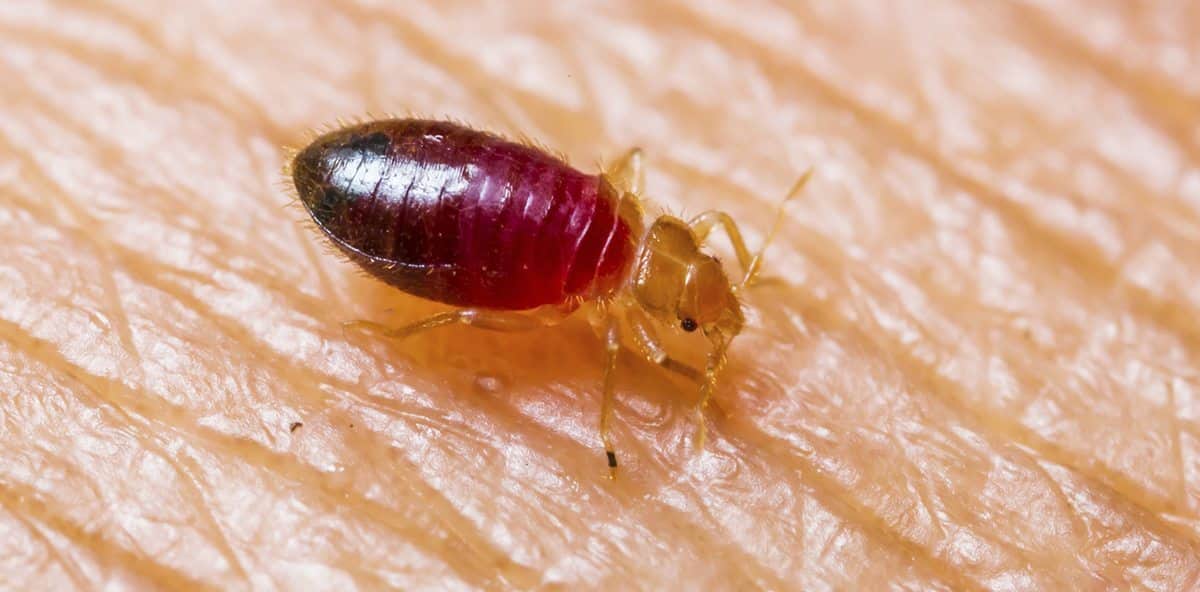
An adult bed bug that has fed on human blood will have an elongated body plumped up with its meal. Nymphs are similar, except they shed their exoskeletons to grow. When they feed, they will have a noticeable red spot on their somewhat translucent bodies.
Notes:
- Blood stains on bedding or clothing do not always mean you have bed bugs.
- Please refer to our guides to make sure you have identified bed bugs properly.
- Typically, you’ll find small rounded or smeared blood stains in higher concentrations near the foot of the bed or your pillowcase.
When a bed bug (or its eggs) are squished it leaves behind blood and other stains and an odor. Read on to learn about these issues.
Blood & Other Stains
If a bed bug is squished, whether on purpose or if you rolled over on it during sleep, there will be a smear of blood on your skin or the bedding. Depending on when they last fed, the blood can appear brownish-red, bright red, or a combination.
Yellow or rust-colored stains can result from bed bug droppings or squished eggs. The stains tend to look small and dot-shaped or splotchy. These stains can spread into a larger area if left untreated, changing to a light brown.
Black stains are from old blood or fresh bed bug droppings. Droppings will appear as clusters of small dark spots on bedding and mattresses.
Odor
Bed bugs are attracted to the smell of carbon dioxide that people emit when they sleep. To “remember” where to feed and lay eggs they emit aggregation pheromones onto the mattress and other hiding spots.
If they sense danger, as you toss and turn in bed, squish them, or flip the mattress, they release alarm pheromones. This particular odor is similar to their homing one but has some different chemicals in it that smell like strong coriander or musty.
According to research from the University of California, Riverside, bed bug shed skins and alarm pheromones contain aldehyde compounds that create this distinctive “obnoxious sweetness” smell. These pheromones can actually attract other bed bugs to the area.
Squished bed bugs that expel blood may also smell like a sweet, metallic odor because it contains sugars and iron. This can also indicate to bed bugs that human blood is nearby, which could potentially make an infestation worse.
Squishing Bed Bug Eggs
Bed bug eggs are very tiny, about the size of a pinhead. A fed female lays 1 to 7 eggs each day for about 10 days. She then feeds again to continue laying.
Eggs are typically laid in cracks, crevices, and mattress seams. Eggs that are older than 5 days old will have an “eyespot”.
If you can find them, they can be squished. However, their tiny size can also make them easy to miss.
Furthermore, the female uses a sticky substance to help “glue” the eggs in place. Squishing is not the best method to get rid of them.
Removing Blood & Other Stains From Squished Bed Bugs
While bed bugs are not known to transmit disease through their bites in natural settings, their presence can cause health concerns. According to research published in the CDC’s Emerging Infectious Diseases journal, bed bugs have been found to carry drug-resistant bacteria like MRSA and VRE, though direct transmission has not been proven.
A comprehensive 2016 systematic review found that while over 45 pathogens have been detected in bed bugs, no study has demonstrated actual disease transmission to humans in real-world conditions. The researchers suggest bed bugs may contain “neutralizing factors” that prevent pathogen transmission.
Important: Bed bug bites are itchy and irritating, and their presence can cause people to sleep poorly. Read on about how to deal with these issues.
Skin Treatment
Thoroughly wash any bites and blood residue off of your skin.
Do not pop the bites to release the “fluid”, but treat them with anti-itch cream and antibiotic ointment as needed. An ice pack can help to reduce any swelling.
Consult your doctor if the itchiness does not go away or if an infection occurs.
Bedding Treatment

If you don’t want to buy new sheets, try the following to remove stains.
Before transporting bedding and other items to the laundry room, carry them in sealed plastic bags to avoid spreading the infestation.
Use cold water at first to remove stains.
Hot temperatures from the washing machine and dryer will permanently set blood stains. However, using hot water and drying will kill any remaining bed bugs and eggs.
It is recommended that you relaunder the items in hot temperatures after the stains are removed.
Note: Do not mix chemicals (i.e. bleach, ammonia, hydrogen peroxide, etc.), since they can cause a harmful reaction.
Cold Water & Soap
For fresh, bright red blood stains, wet the spots with cold water. Scrub the stain with laundry soap to create a lather. Rinse in cold water, repeat if necessary, then launder as usual.
Bleach
Alternatively, use a fabric-safe bleach treatment, keeping in mind that bleach can alter the color of fabrics. Bleach should be used with ventilation and precaution.
Soak the items in cold water first, then treat them with bleach before laundering.
Laundry-Formulated Stain Remover
For older blood stains, use a pretreatment stain remover, before laundering.
For example, Didi Seven Multi-Purpose Universal Stain & Spot Remover is formulated to tackle many stains, including blood. This product is a concentrate, so follow the directions for diluting it. Then spray it onto the stains before putting the items in the washing machine.
This product has the following features:
- Concentrated 2-ounce tube
- Binds to and targets stains to dissolve them
- Treats stains from wine, rust, blood, food, coffee, juice, tea, pet, and more
- Safe for most fabrics (not for suede, leather, or velvet)
- Versatile for use on carpets, countertops, appliances, sinks, etc.
- Can be diluted for sprays or soaking
Ammonia
Ammonia should always be used with precaution and ventilation. Do not get it on your skin or in your eyes. Ammonia is not best for use on sensitive fabrics such as silk.
To use it to treat blood stains, do the following:
- Mix 1 tablespoon with 4 ounces of water.
- Pour it onto the stains and scrub the spots with a toothbrush.
- Let it soak for 5 minutes.
- Run it through a rinse-only cycle with some mild laundry soap.
- Repeat as needed, then launder as usual.
Hydrogen Peroxide
Hydrogen peroxide can also alter the colors of fabrics, and works best for white fabrics. It is not recommended for delicate fabrics.
Apply a few drops to the stain and let it soak in cold water for 5 minutes. Use a microfiber or soft cloth to scrub the stain. Rinse, repeat if necessary, then launder as usual.
Toothpaste
Moisten a toothbrush and use it to apply a dab of toothpaste to the stain. Concentrate scrubbing on the stain only.
Let the paste dry and then rinse with cold water. Launder as usual.
Bed Bug Control
Our extensive guides give detailed information about the methods you can use to eliminate bed bugs once and for all.
According to the EPA’s bed bug guidance, integrated pest management (IPM) approaches are most effective for bed bug control.
Effective bed bug control methods include:
- Heat treatments
- Freezing
- Steaming
- Bed bug traps (including those using pheromone attractants)
- Containment & encasement
- Prevention tactics
- Professional pest control services
Conclusion
Squishing a bed bug is not the best solution for killing this pest.
If you do, you can release human blood that smells good to other bed bugs and leaves behind a stubborn stain. Squished bed bugs also emit musky pheromones through their alarm response. While the risk of pathogen transmission from bed bugs remains theoretical based on current research, it’s still best to avoid direct contact with squished bugs.
Stains from bed bug presence can be removed with cold water and treatments such as soap, ammonia, toothpaste, or bleach. (Never mix chemicals.)
After stains are removed, all bedding and adjacent furniture, crevices, and so on should be treated with heat or other suitable bed bug killers as described above.
If all else fails, a professional pest control service can assist you.
Authoritative Sources Referenced:
- CDC – Bed Bug Infestations in Urban Environments
- CDC – Bedbugs as Vectors for Drug-Resistant Bacteria
- Systematic Review – Bed Bugs and Disease Transmission
- University of California Riverside – Bed Bug Pheromone Research
- Scientific Reports – Alarm Pheromone Release in Bed Bugs
- Simon Fraser University – Bed Bug Aggregation Pheromones
- London School of Hygiene & Tropical Medicine – Bed Bug Trap Development
- EPA – Bed Bug Control Guidance