Live trapping is the most effective method for removing an armadillo from your property, especially when they’ve burrowed into hard-to-reach places.
You should purchase a trap that’s large and sturdy enough to securely hold an armadillo. Place the trap near areas showing armadillo activity with attractive bait. Once captured, the armadillo must be released elsewhere according to local and state wildlife regulations. Implement preventative measures to deter future armadillos from damaging your yard.
This article provides step-by-step instructions on using an armadillo trap effectively, along with practical tips, safety considerations, and prevention strategies.
Best Armadillo Trap Setup – 5 Steps

Follow these steps to successfully trap an armadillo on your property:
1. Before You Start…
Know The Law
Before trapping an armadillo, check with your local or state wildlife office for applicable regulations and laws. Many states prohibit wildlife relocation or require specific permits. A local pest control service can also provide information about regulations in your area.
Understand Armadillo Behavior
To trap an armadillo effectively, understanding its activity patterns is essential. These creatures are primarily nocturnal, living in underground burrows and digging deep into soil to eat worms, grubs, and other insects. Armadillos have poor eyesight but rely on their powerful sense of smell to locate underground food sources.
Verify That The Pest Is An Armadillo
Confirm that an armadillo is the culprit destroying your yard. If you don’t spot one directly, you’ll likely notice their distinctive signs:
- Droppings: Often found near or buried in burrows and dug-out food pits. About 1 inch in length with visible remnants of insects, soil, and debris
- Excavation damage: Dug-up gardens, lawns with holes several inches deep and about 5 inches wide
- Burrows: Tunnels underneath structures, foundations, and porches (can extend 7-20 feet)
- Water issues: Pooling water and muddy areas resulting from their digging and burrowing activity
Never handle armadillos or their feces without proper PPE protection. Armadillos can carry Mycobacterium leprae, the bacteria that causes Hansen’s disease (leprosy). While the risk is very low for most people, they may also carry the risk of rabies or salmonella in their feces.
2. Purchase A Trap
Choose a sturdy metal live-capture trap capable of holding at least a raccoon-sized animal. The trap should measure minimally 30 inches long, 12 inches high, and 10 inches wide.
Havahart Large 1-Door Humane Catch and Release Live Animal Trap
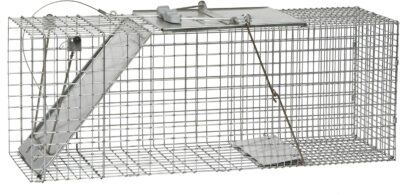
This professional-grade trap offers the durability and features needed for effective armadillo trapping:
- 32 x 10 x 12 inches – appropriately sized for armadillos
- Alloy steel construction with 12-gauge wire mesh
- Rust and corrosion resistant for outdoor use
- Handle guard for safe transport
- 1-door design to prevent escape
- Spring-loaded door responds to heavier animals, preventing false alarms
- Smooth internal edges protect the animal from injury
- Large carrying handle maintains distance from trapped animal
- Includes comprehensive user guide
3. Set Up The Armadillo Trap With Bait
Placement
Proper trap placement is crucial for success. Armadillos follow the same pathways repeatedly, often moving along edges and fences. Look for matted lawns and vegetation indicating regular routes. Escape burrows are typically located near these pathways.
Place traps directly on the pathway or over burrow entrances—essentially, position them where armadillo activity is most evident. Follow the manufacturer’s instructions to set the trigger mechanism properly.
Tips For Setting Up Traps
- Ensure the trap sits flat and flush with the ground surface
- Keep the trigger mechanism free and clear of debris
- If possible, adjust the pan tension high to prevent misfires—the armadillo’s weight should be sufficient to trigger it
- Create a clear entry path by adding barriers (rocks, logs, or other materials) along the route to funnel the armadillo toward the trap
- Avoid contaminating the trap with human scents:
- Wear gloves when handling the trap
- Avoid wearing lotions, cologne, or perfume
- If you clean the trap with strong odors (pine or bleach), wash thoroughly with soapy water and rinse until the scent is completely gone
- Set traps before dusk, right before armadillos become active
Using Bait
While some people avoid bait to prevent catching unintended animals, traps work significantly better when baited with attractive food.
Since armadillos primarily dig for insects, bait should replicate their natural food sources. They also consume rotten fruit, eggs, and carrion.
Baiting procedure:
- Wear gloves to keep your scent off the bait
- Mix rotten fruit, mealworms, grubs, sardines, or maggots into a small pile of dirt
- Place the mixture at the far end of the trap
- Wait for the armadillo to locate it by scent
4. Check The Trap Regularly
Some homeowners discover that armadillos damage traps while attempting to dig free with their powerful claws. This often occurs when traps aren’t checked promptly after capture.
Refer to the manufacturer’s instructions, but at minimum, check the trap the morning after setting it. Daily checks are essential for humane treatment and compliance with most state regulations.
5. Release The Armadillo Elsewhere
You must consult local authorities about trapping and releasing armadillos. Wildlife relocation laws vary significantly by state, and many states prohibit releasing trapped wildlife on property other than where it was caught.
Never release an armadillo on private property without permission or in high-traffic areas. Generally, armadillos must be released at least 5-10 miles from the capture location (check your local regulations for specific requirements).
Safe transport and release:
- Transport the trapped armadillo in your vehicle’s trunk with a disposable tarp underneath
- Follow the user guide for safe release procedures
- Open the trap away from yourself and step back a safe distance
- Wait patiently for the armadillo to exit on its own
- Disinfect all items that contacted the armadillo using diluted bleach solution or suitable disinfectant
- Wash your hands thoroughly after the entire process
What To Do After The Armadillo Is Gone
Repair The Yard
Once the armadillo is removed, repair the damage to your yard, garden, and landscaping:
- Fill in holes and divots with soil
- Spread grass seed in damaged areas
- Properly dispose of feces (wear gloves and follow sanitation guidelines)
- Fill burrows with gravel to prevent or slow future burrowing in the same locations
Take Preventative Steps To Deter Future Armadillos
Implement these strategies to keep future armadillos off your property:
- Apply deterrent odors such as vinegar or pine around gardens and vulnerable areas
- Maintain a tidy yard to eliminate hiding spots and reduce cover
- Eliminate pooling water to reduce insect populations that attract armadillos
- Install an angled fence (buried 12-18 inches deep) that armadillos cannot dig under or jump over
- Remove food sources like fallen fruit, pet food, and accessible garbage
- Consider motion-activated sprinklers to startle and deter armadillos
Conclusion
Live trapping is an effective and humane method for removing armadillos from your property.
Success requires understanding armadillo behavior patterns so traps can be strategically placed. Effective trapping involves finding the right location, using appropriate bait, and setting proper trigger pressure.
With patience, persistence, and the tips provided above, you can successfully trap problematic armadillos. If you continue experiencing difficulties, consult a professional pest control or wildlife management service for expert assistance.